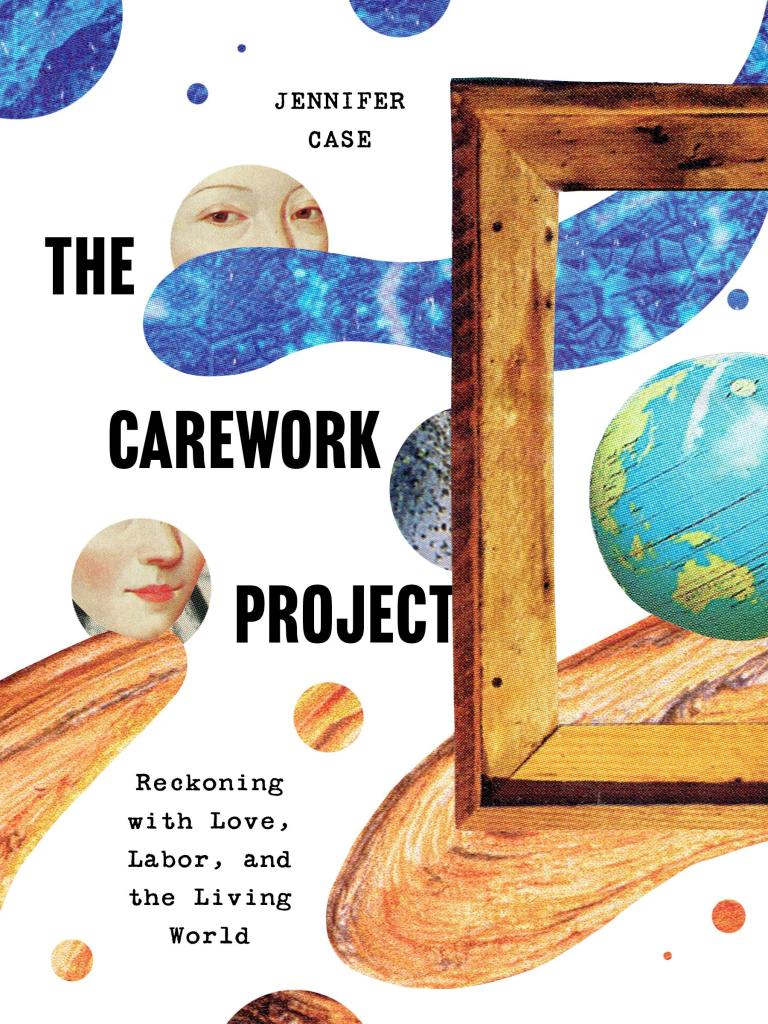

The Carework Project: Reckoning with Love, Labor, and the Living World
Trinity University Press, August 2026
“Care work is climate work.” Jennifer Case first encountered this message during the pandemic, while monitoring her daughter’s attempts at virtual learning and trying to keep her toddler from running naked into faculty Zoom meetings. The phrase appeared online beside photos of backyard gardens and essential workers in masks, offering an unexpected validation: caring for others—whether children, the ill, or the earth—is vital work. Intrigued, Case began exploring the connections between personal, domestic, and ecological care. What started as research through the lenses of feminism and economics grew into a larger investigation that touched on environmental thought, Indigenous teachings, disability studies, and the psychology of empathy. Along the way, Case developed a broader spiritual and ecological awareness that changed how she viewed the act of caring itself.
Part memoir and part cultural reflection, The Carework Project combines intimate storytelling with research, interviews, and visual art to explore what care means in a time of climate crisis. Case shows how caregiving, often invisible, gendered, or undervalued, is central to our survival. She examines how trauma and burnout affect our ability to connect, and how healing can start with the smallest gestures of attention. The book invites readers to envision a world where care is not a burden but a source of mutual renewal and belonging.
Visually striking collage postcards enhance the text. The result is a hybrid work that feels both timely and timeless, honoring the messy, creative, and transformative act of caring for one another and the living world.
Preorder through:
Praise:
Coming Soon!
We Are Animals: On the Nature and Politics of Motherhood
Trinity University Press, September 2024
When Jennifer Case became pregnant unexpectedly with her second child, the prospect of caring for another infant in a society with high expectations and low support for mothers overwhelmed her. She sought to reclaim control over, if not her changing body, then at least her declining mental health. Immersing herself in research, Case learned that the United States has one of the highest maternal death rates among developed countries, and one in every five women develops a mental health issue as a result of pregnancy. It became clear to her that in order to address the sexism and isolation mothers face–including the racism that further marginalizes women of color–we must recognize these as social problems that affect us all.
We Are Animals draws attention to these issues by examining key moments in Case’s life where her experience as a woman in twenty-first-century America came in conflict with her experience as a child-bearing mammal. In doing so, these essays offer a balm for women who have struggled in silence over childbirth trauma, conflicted responses to motherhood, or a deeply felt intuition that what their bodies needed as mothers did not match what society provided. The essays also offer a much needed, nuanced perspective for policymakers, activists, and medical professionals who continue to shape women’s experience of motherhood.
Available through:
Praise:
“Eloquent, beautiful, moving, and profound.”
— Andrew Solomon, award-winning author of The Noonday Demon and Far From the Tree
“Mothering in the late capitalist ruins can be, counterintuitively, extremely lonely work. Jennifer Case’s brilliant essay collection not only describes how and why this is true, she remedies some of that resounding isolation by keeping company with her reader, offering the reparative gift of her attention and fine wordsmithing. Like Louise Erdrich and Anne Lamott she turns the experience of early motherhood into literature.”
— Elizabeth Rush, author of Rising and The Quickening
“Bearing, birthing, and nursing a child must be the hardest work in the world. Jennifer Case has taken on that arduous labor twice, the first time willingly, the second time reluctantly. Drawing on her own experience, her wide reading, and her ample talents as a writer, she has produced a searing, illuminating account of motherhood, in all its cultural as well as biological complexity. As a father privileged to watch my wife give birth to our two children, astonished by her power, I gained insights from every page of this captivating book.”
—Scott Russell Sanders, author of The Way of Imagination
“Women’s birth stories—like our bodies—still struggle against cultural conditioning, paternalism, and the tensions wrought by sexism and sex differences. It is so important that we keep telling them like Case has done in We Are Animals, a satisfying, insightful journey through early motherhood that’s kept grounded with fresh reportage and fascinating biological and historical findings.”
— Jennifer Block, author of Pushed and Everything Below the Waist
“With no shortage of evocative images and bare, raw admissions, Case beautifully confronts the question of how women are to honor and love what their animal bodies are capable of doing without becoming constrained and trapped by it in today’s world, while also pointing out the beauty in the ordinary, everyday miracle of motherhood.”
— Elizabeth Soule, Southern Literary Review
“Case’s essays are both a balm for disheartened mothers and the uncomfortable, necessary pressure needed to staunch the United States’ propensity to dismiss, overrule, and disparage women’s experiences, needs, and desires.”
— Whitney Jacobson, Split Rock Review
“Refreshingly honest and deeply considered.”
— Southern Review of Books
“A searing and beautiful portrait of motherhood in America. With propulsive prose and stunning detail, Jennifer Case chronicles not just the birth of her two children, but also the transformation that women undergo as they learn to care for and love their children.”
— Michaeleen Doucleff, PhD, author of the New York Times bestseller Hunt, Gather, Parent
“Jennifer Case’s lyrical, absorbing essay collection We Are Animals offers many kinds of birth stories—hospital births, home births, and the harrowing political landscape of forced birth. Yet her most piercing, revelatory attention is applied to the birth of the mother—this person who, while nursing, must learn to eat with a non-dominant hand; this person whose safety and care are unjustly shaped by race and class; this person who navigates a new life that is so often fearful and lonely. Through it all, Case makes a wise, persistent case for community, collectivism, and hope. I felt the welcome possibility, in these pages, of a less lonely future for all of us.”
—Belle Boggs, author of The Art of Waiting
Praise for the essay “A Political Pregnancy,” The Rumpus Top 20 of 2020:
“Essays that shed new light on the female struggle to maintain autonomy over their bodies are rare, and this one shines brightly. Case frames her questions in the context of love and relationships, burrowing deeper into this divisive issue than many other essays can dare to go. It is a perspective-shifting read.”
—Kate Branca, Features Editor, The Rumpus
Interviews and Features:
“The Animal Mother: A Conversation about the Nature and Politics of Motherhood.”
Orion, February 2025


“‘We Are Animals’ is Candid and Complex.”
Review in the Southern Review of Books, Sept. 2024
“The Memoir Land Author Questionnaire: Jennifer Case.”
Memoir Land, Sept. 2024


“On the Nature and Politics of Motherhood: A Conversation with Jennifer Case.”
The Rumpus, Nov. 2024
“Whatever We Hope Can’t Be Hoarded: A Conversation on Motherhood and Environment.”
Terrain.org, February 2025


“Writing Motherhood in Arkansas and the Missouri Ozarks.”
Oxford American, March 2025
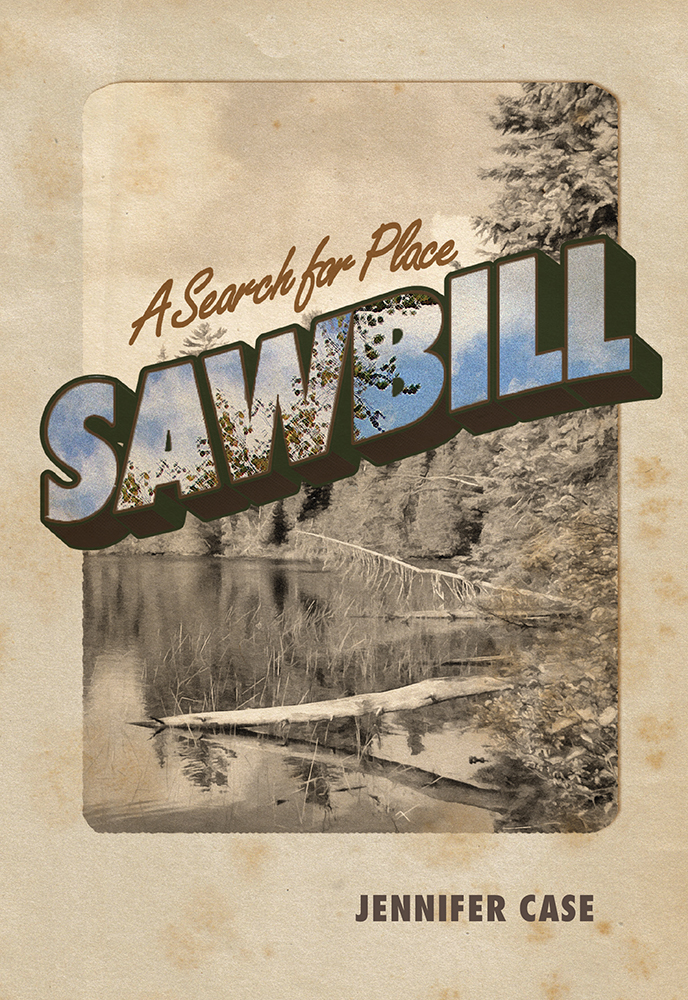
Sawbill: A Search for Place
University of New Mexico Press, 2018
Honorable Mention in Memoir, 2019 Northeastern Minnesota Book Awards.
In Sawbill, Jennifer Case watches her family suddenly exchange their rooted existence for a series of relocations that take them across the United States. In response, Case struggles to “live in place” without a geographical home, a struggle that leads her to search for grounding in the now-dismantled fishing resort her grandparents ran in northeastern Minnesota. By chronicling her migratory adulthood alongside the similarly unpredictable history of Sawbill Lodge, this memoir offers a resonant meditation on home, family, environment, and the human desire for place in the inherently mobile twenty-first century.
Available through:
Praise:
“In her pilgrimage to learn more about the Sawbill Resort once owned by her grandparents and the Boundary Waters of childhood vacations, Jennifer Case embarks on a personal journey, rediscovering the vast beauty of an almost pristine landscape as well as a complicated inner landscape as she surveys the boundaries of family bonds, love of the land, and our inexplicable, inextricable connections to place.”
—Jill McCabe Johnson, Artsmith, author of Borderlines
“Case’s story, while specific to her own family’s history and migrations, is one that anyone who has ever loved and left a place can connect to, one that anyone who has ever searched for or made a home can understand.”
“Case regularly challenges her own perceptions, attitudes, and convictions and acknowledges the slippery nature of nostalgic history […] Yet, her intricate blending of family chronicles, personal experience, Minnesota’s geography, and philosophies of place effectively navigates the spectrum between reality and imagination, memory and truth, wishes and acquiescence to create a stimulating read for anyone who has asked how the past influences the present.”
—Split Rock Review
Interviews and Features:

An interview with Arts & Letters, KUAR, 2020
An excerpt published in Terrain.org, February 2018

“Searching for Place: An Interview with Jennifer Case“
Terse Journal, February 2020
“Celebrating the Arkansas Literary Festival’s 15th.”
Arkansas Life, 2018

 Jennifer Case